Clinic-Grade Precision. Lab-Certified Results.
We don't guess — we measure. Every diagnosis begins with validated instruments that give objective, quantifiable data. No impressions, no assumptions, no trial and error.
Halimeter® VSC
Gas Analysis
The Halimeter® is the internationally accepted gold standard for measuring halitosis. It detects and quantifies the three primary volatile sulfur compounds — hydrogen sulfide (H₂S), methyl mercaptan (CH₃SH), and dimethyl sulfide — at parts-per-billion (ppb) sensitivity. Where other clinics rely on subjective smell assessments, we give you a precise numeric baseline from the first minute of your consultation.
- Measures H₂S, CH₃SH, and dimethyl sulfide simultaneously
- Objective numeric readings — not subjective impressions
- Track measurable improvement at every follow-up visit
- Validated in peer-reviewed clinical research worldwide
- Identifies intraoral vs. extraoral odour origin

DNA Oral
Microbiome Analysis
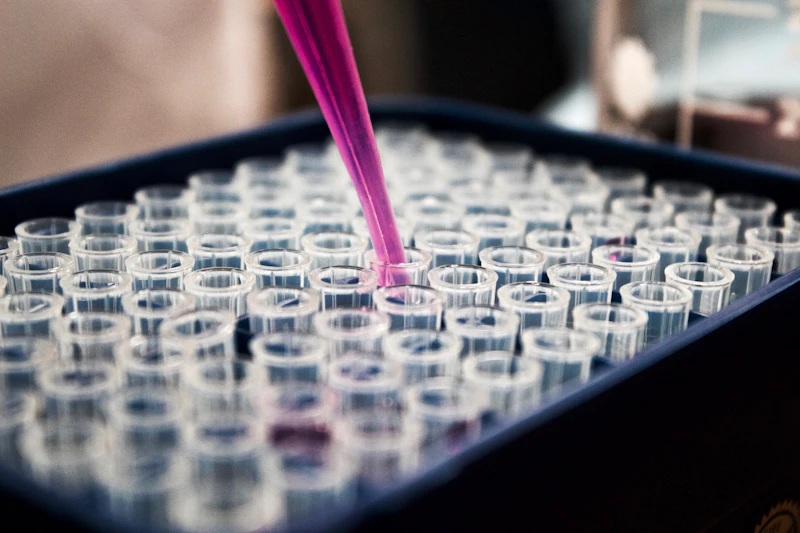
Through our accredited USA laboratory partners, we analyse your oral microbiome at the genetic level using next-generation sequencing (NGS). This identifies the precise bacterial species driving your odour — not a category, not a guess, but the actual organisms by name. Armed with this data, we can select targeted antimicrobial agents that are effective against your specific bacterial profile, rather than broad-spectrum treatments that often fail.
- Next-generation sequencing identifies 500+ bacterial species
- Processed at CLIA-certified laboratories in the United States
- Results quantify relative abundance of pathogenic species
- Enables personalised, targeted antimicrobial selection
- Post-treatment test confirms bacterial elimination
Salivary Flow &
pH Mapping
Saliva is the oral cavity's primary defence against odour-producing bacteria. When flow is reduced — due to medications, systemic illness, mouth-breathing, or Sjögren's syndrome — bacterial populations explode and VSC production rises dramatically. We measure unstimulated and stimulated salivary flow rates using calibrated collection tubes, and pair this with oral pH strip mapping across multiple sites to identify acidic microenvironments where anaerobic bacteria thrive.
- Unstimulated flow below 0.1 mL/min indicates clinical hyposalivation
- pH below 6.0 in posterior tongue or sulcus indicates anaerobic risk zones
- Identifies medication-induced dry mouth as a primary driver
- Guides salivary stimulant and substitute selection


High-Resolution
Digital Oral Imaging
Our high-magnification intraoral camera captures the entire oral cavity — tongue coating distribution, tonsillar crypts, gingival margins, and posterior oropharynx — with clinical-grade precision. This visual assessment is conducted before and after treatment, creating a documented record of change. In conjunction with gas and bacterial data, imaging confirms the anatomical locations that correspond to elevated VSC readings, guiding targeted mechanical and chemical intervention.
- Tongue coating graded using validated Winkel Tongue Coating Index
- Tonsil crypt depth assessed for tonsillolith formation
- Gingival margin and subgingival pocket visualisation
- Before-and-after photo documentation at every visit
BANA Rapid
Chairside Testing
The BANA (benzoyl-DL-arginine-naphthylamide) chairside test detects the three most clinically significant anaerobic bacteria linked to periodontal disease and halitosis — Treponema denticola, Porphyromonas gingivalis, and Tannerella forsythia. These species are disproportionately responsible for VSC production and consistently appear in patients with refractory halitosis. Results are available in under 15 minutes, allowing same-visit clinical decision-making without waiting for lab turnaround.
- Detects T. denticola, P. gingivalis, and T. forsythia simultaneously
- High specificity for the primary periodontal-odour pathogens
- Directs same-session mechanical debridement focus
- Complements DNA testing for rapid preliminary bacterial data

Targeted Treatment
Precision Protocols
Once the diagnostic picture is complete, we deploy treatment protocols selected specifically for your bacterial and anatomical profile. This includes species-targeted antimicrobial formulations (selected from your DNA results), ultrasonic subgingival debridement for periodontal-origin cases, ozone-irrigated tonsil crypt treatment for tonsillolith-related odour, and evidence-based tongue microbiome restoration therapy. No protocol is generic — every treatment component is chosen because your data indicates it will work.
- Antimicrobial agents chosen against your specific DNA-confirmed species
- Ultrasonic debridement for subgingival periodontal biofilm
- Ozone-irrigated tonsil crypt treatment where indicated
- Post-treatment Halimeter® re-measurement confirms VSC reduction
- Post-treatment DNA test confirms bacterial elimination at species level
What Most Clinics Do.
What We Do Instead.
The difference between a treatment that works and one that doesn't begins with the quality of the diagnostic data behind it.
Questions About Our Instruments
What patients ask most about the diagnostic technology and what it means for their case.
The Halimeter® test is completely non-invasive and takes less than 90 seconds. You breathe normally through a small tube held near your mouth for a few seconds — there is no instrument inserted into the mouth. The only requirement is that you avoid eating, drinking (except water), smoking, or using mouthwash for two hours before the test, as these can temporarily suppress VSC readings and give an artificially low baseline. The reading appears on screen immediately.
The DNA oral microbiome test involves no blood. Collection is done with a simple oral swab — a sterile cotton-tipped swab is gently applied to the posterior tongue, tonsil area, and subgingival sulcus for 10–15 seconds at each site. The swab is sealed into a collection tube and sent to our USA laboratory partners by international courier. Results are returned digitally to the clinic within 48–72 hours of receipt at the lab. The entire collection process at the clinic takes under five minutes.
The Halimeter® test and visual assessment are performed at every first consultation as they are essential to establish a baseline. DNA testing is recommended for all patients who present with chronic or refractory halitosis because it determines the specific treatment protocol — without it, antimicrobial selection is generic rather than targeted. BANA testing is added when periodontal involvement is clinically suspected. Salivary flow assessment is added when dry mouth is indicated by symptoms or medication review. We never run tests for the sake of running them — each instrument is deployed because it answers a specific diagnostic question your case requires.
A clinically healthy oral cavity typically produces a Halimeter® reading below 75 ppb (hydrogen sulfide equivalents). Readings between 75–150 ppb represent mild halitosis; 150–400 ppb is moderate; above 400 ppb is severe. We explain your reading to you at the time of measurement and give you the actual number — not a vague category. Throughout your treatment, every follow-up visit includes a re-measurement, so you can see your number falling in real time. Treatment is considered complete only when your reading reaches and sustains below 50 ppb across two consecutive visits.
Halimeter® analysis and DNA oral microbiome testing with USA-certified laboratory processing are not standard offerings at general dental clinics in Lebanon. Most dental practices assess halitosis subjectively or use generic scoring systems without objective gas measurement. We have built the diagnostic infrastructure specifically because we treat halitosis as a primary clinical focus — not as a secondary observation during a routine dental appointment. This is the only clinic in Lebanon that routinely combines real-time VSC gas analysis, DNA microbiome sequencing, and BANA chairside testing in a single halitosis consultation protocol.
Not necessarily. DNA testing identifies the specific pathogenic species present — what we do with that information depends on which species they are and at what abundance. Some cases are effectively managed with targeted antimicrobial oral rinses, probiotics, or mechanical debridement alone. Systemic antibiotics are reserved for cases where a specific antibiotic-sensitive pathogen is present in high concentrations, is causing a refractory infection, or is driving periodontal disease that does not respond to mechanical treatment. The goal of DNA testing is to be precise, not to prescribe more — in many cases it allows us to use less medication because we know exactly what needs to be targeted.
Ready for a Diagnosis
Built on Data?
Your first consultation includes Halimeter® analysis, a full visual assessment, and a medication review — giving you a clinical picture most patients have never had. No guesswork. No lectures. Just answers.
DNA results in 48–72 hours · Halimeter® at every visit · Beirut, Lebanon